
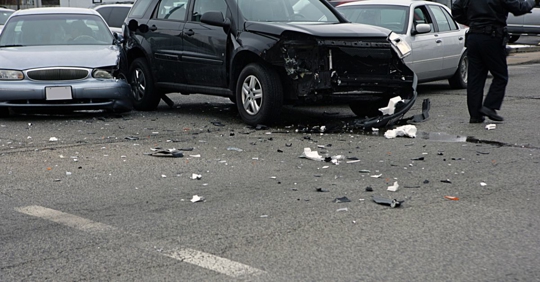
Accidents involving several vehicles can leave everyone involved with unanswered questions about what happened and who may be responsible. Between multiple drivers, conflicting statements, and extensive property damage, determining liability is often more complicated than in a two-car collision. While recovering from injuries and managing insurance claims, it can be difficult to understand how fault is evaluated. Learning the key factors that influence liability decisions can help you better navigate the claims process after a multi-vehicle accident.
Understanding Liability in Multi-Vehicle Accidents
A multi-vehicle accident involves three or more vehicles and may occur in chain-reaction crashes, highway pileups, or intersections. Because several parties may contribute to the collision, liability is not always assigned to a single driver.
Insurance companies, investigators, and legal professionals review the sequence of events to determine how the crash unfolded. In some cases, more than one driver may share responsibility based on their actions before or during the collision. A careful review of the available evidence is often necessary before liability can be determined.
Evidence Used to Determine Responsibility
Determining liability requires examining several forms of evidence to understand how the accident occurred. The more complete the documentation, the easier it may be to establish each driver’s role.
- Police reports: Initial observations, diagrams, and statements from those involved can provide valuable context.
- Photos and videos: Images of vehicle damage, skid marks, road conditions, and traffic signals may help reconstruct the collision.
- Witness statements: Independent accounts can clarify the sequence of events and support other available evidence.
Each piece of evidence contributes to a broader understanding of the crash. When reviewed together, these details can help identify how responsibility should be divided among the parties involved.
Driver Actions That May Affect Liability
Driver behavior is one of the primary factors considered when evaluating fault. Even when multiple vehicles are involved, investigators often look at whether any driver’s actions contributed to the chain of events.
Speeding, distracted driving, following too closely, unsafe lane changes, and failing to obey traffic signals are common issues examined during an investigation. In some situations, one driver’s negligence may trigger a series of collisions, while other drivers may also share partial responsibility if they failed to react safely. Reviewing each driver’s conduct helps create a more complete picture of how the accident occurred.
Additional Factors That May Influence Fault
Liability decisions are not based solely on driver actions. Other circumstances surrounding the collision may also play a role in determining responsibility.
- Road and weather conditions: Rain, fog, poor visibility, or hazardous road surfaces may affect how the accident occurred.
- Vehicle condition: Brake failures, tire problems, or other mechanical issues could contribute to a collision.
- Traffic patterns: Heavy congestion or sudden traffic slowdowns may influence how multiple vehicles become involved.
These factors are evaluated alongside the available evidence rather than independently. Understanding the full context of the accident helps investigators make a more informed assessment of liability.
Why Liability Can Be More Difficult to Resolve
Multi-vehicle accidents often involve several insurance companies, multiple witness accounts, and differing versions of what happened. As each insurer reviews the available evidence, disagreements about responsibility may arise. Delays in reporting, missing documentation, or conflicting statements can further complicate the claims process.
Because liability may be shared among multiple parties, determining financial responsibility often requires a detailed evaluation of the facts. Keeping accurate records and preserving available evidence can help support a clearer understanding of the incident.
Protecting Your Interests After a Multi-Vehicle Accident
Determining liability after a multi-vehicle accident requires a careful review of the evidence, the actions of everyone involved, and the circumstances surrounding the collision. Understanding how these factors work together can help you make informed decisions while navigating the claims process.
At Harmonson Law Firm, we help individuals understand how liability is evaluated after complex vehicle accidents and what information may support their claim. If you have questions about a multi-vehicle accident or would like guidance on your legal options, complete our online contact form or contact us at (915) 233-6427 to schedule a consultation.