El Paso Car Accident Attorney
Insurance-Defense Background. Now Fighting for Injured Clients.
Clark Harmonson built the early part of his career at a large Houston firm defending insurance companies and corporations against injury claims. In 2004, he switched sides. That background gives Harmonson Law Firm a perspective most car accident lawyers don’t have: we know how insurers evaluate claims, how adjusters look for reasons to reduce payouts, and what evidence actually moves the needle in negotiations. That’s the foundation we bring to every car accident case in El Paso.
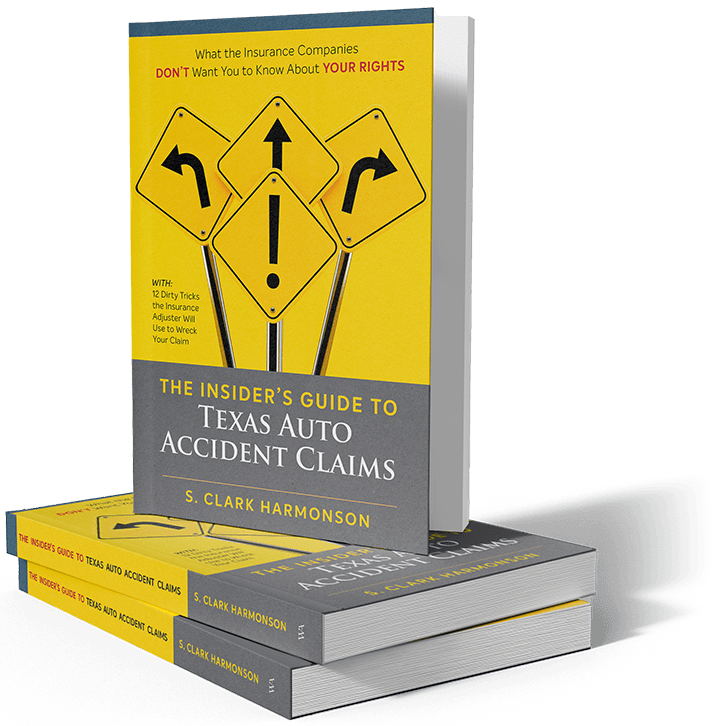
Clark also authored The Insider’s Guide to Texas Auto Accident Claims, a published resource covering what insurance companies don’t want claimants to know. We’ve recovered over $25,000,000 for hundreds of clients across more than a decade of practice. Every client works directly with an attorney. Cases are not handed off to support staff.
Call (915) 233-6427 or contact us online to speak with our El Paso car accident lawyers about your injuries and legal options.
Why Clients Choose Harmonson Law Firm
Our qualifications reflect how we approach each case and how we show up for clients during one of the most stressful periods of their lives.
- Over $25,000,000 recovered for hundreds of clients in 10+ years
- Published author of The Insider’s Guide to Texas Auto Accident Claims
- Super Lawyers designation, 2022 through 2025
- 10.0 Avvo rating
- Sustaining Life Fellow of the Texas Bar Foundation, one of the highest distinctions in the State Bar of Texas
- Physical offices in both El Paso and Las Cruces, not a remote or fly-in operation
- MADD El Paso sponsor, reflecting a commitment to road safety beyond the courtroom
- No-Fee Policy: you pay nothing unless we secure a settlement or court award
Client Testimonial: “The Best Decision. My family and I were in a car accident back in 2019, and Mr. Clark and his staff did everything they could to get us taken care of. I’m extremely happy we decided to go with him. It was a lengthy process, and he got the job done!” — Monica C.
Texas Car Accident Laws You Need to Know
Texas law governs how fault is assigned, what coverage is required, and how long you have to act. These rules directly shape what your claim is worth and whether you can pursue one at all.
The Fault-Based System in Texas
Texas operates under a fault-based system: the driver responsible for causing the accident is responsible for the resulting damages. After a collision, the injured party may:
- File a claim with their own insurance company
- File a third-party claim with the at-fault driver’s insurer
- Pursue a personal injury lawsuit against the at-fault driver directly
This differs from “no-fault” states, where each driver seeks compensation from their own insurer regardless of who caused the crash.
Modified Comparative Fault Rule
Texas follows a modified comparative fault rule, also called proportionate responsibility. You can recover damages only if you are found less than 51% at fault. If you share some responsibility, your compensation is reduced proportionally.
Example: A driver found 20% at fault who is awarded $10,000 recovers $8,000.
Required Insurance Coverage in Texas
Texas requires drivers to carry minimum liability coverage of:
- $30,000 for bodily injury per person
- $60,000 per accident
- $25,000 for property damage
This is known as 30/60/25 coverage. Driving without it can result in fines, license suspension, and additional penalties if you cause an accident.
Statute of Limitations
Texas imposes a two-year statute of limitations on personal injury and property damage claims from car accidents. Missing that deadline typically means losing your right to compensation entirely.
Reporting Requirements
Texas law requires that accidents involving injury, death, or significant property damage be reported to law enforcement. Drivers must remain at the scene and exchange information. Leaving the scene is a criminal offense that can result in fines, imprisonment, and license revocation.
El Paso’s Most Dangerous Roads & Intersections
El Paso’s geography and major transportation corridors create accident risks that are specific to this city.
High-Risk Areas
- Interstate 10: Heavy commercial truck traffic and high speeds along this major international freight corridor create serious collision risk
- Loop 375 (Border Highway): Multiple lanes and merging traffic generate frequent collisions
- US-54/Patriot Freeway: Active construction zones and changing traffic patterns
- Mesa Street: High pedestrian traffic near UTEP campus
- Montana Avenue: Commercial truck traffic and multiple entry points
Common El Paso Accident Scenarios
- Commercial truck accidents on I-10 and major freight corridors
- Border-related traffic incidents involving drivers unfamiliar with local roads
- Construction zone accidents from ongoing infrastructure work throughout the city
- Pedestrian accidents in high-traffic commercial and university areas
- Intersection collisions at major crossroads during rush hour
Types of Car Accidents We Handle
- Rear-End Collisions: One vehicle crashes into the back of another, usually because the trailing driver was following too closely or not paying attention. These are among the most common accidents in El Paso traffic.
- Head-On Collisions: Two vehicles collide from opposite directions, often with severe results due to the combined force of impact. These frequently occur on rural roads surrounding El Paso.
- Side-Impact Collisions (T-Bone Accidents): The front of one vehicle strikes the side of another. Common at El Paso intersections, particularly during rush hour.
- Sideswipe Collisions: Two vehicles brush against each other while traveling in the same or opposite direction, often when a vehicle drifts from its lane.
- Rollovers: A vehicle flips onto its side or roof, often caused by sharp turns, a collision, or unstable terrain. SUVs and trucks are particularly vulnerable.
- Single-Vehicle Accidents: Involve one vehicle, often due to driver error, striking a fixed object, or road defects.
- Commercial Truck Accidents: El Paso’s role as a major shipping hub means 18-wheeler and commercial vehicle accidents are common and often result in serious injuries.
- Pedestrian Accidents: El Paso’s downtown and university district see elevated rates of these serious incidents.
- Hit-and-Run Accidents: A driver leaves the scene without exchanging information or helping the injured. This is a criminal offense in Texas with serious legal consequences.
- Motorcycle Accidents: Often caused by a motorcycle being less visible to other drivers or a rider losing control. The resulting injuries can be severe.
Common Causes of Car Accidents in El Paso
- Distracted Driving: Phone use, eating, talking to passengers, or adjusting the GPS pulls a driver’s attention from the road and is one of the leading causes of accidents locally and nationally.
- Speeding: Higher speeds reduce reaction time and make collisions more severe.
- Drunk Driving: Alcohol and drugs impair decision-making, reaction time, and vehicle control, often with devastating consequences.
- Reckless or Aggressive Driving: Tailgating, unsafe lane changes, and failure to yield disregard traffic rules and endanger everyone on the road.
- Running Red Lights and Stop Signs: Ignoring traffic signals is a primary cause of T-bone and side-impact crashes at intersections.
- Weather Conditions: El Paso’s desert climate brings sudden dust storms and monsoon conditions that cut visibility and reduce traction with little warning.
- Fatigue or Drowsy Driving: Tired drivers react slowly and may fall asleep at the wheel, making drowsy driving as dangerous as impaired driving.
- Construction Zones: El Paso’s ongoing infrastructure work creates hazards through changed traffic patterns, reduced lanes, and confusing signage.
Car Accident Injuries & Medical Costs
Physical injuries are often the most lasting consequences of a crash. They can affect your ability to work, your long-term earning potential, and your quality of life in ways that extend well beyond the initial impact.
Traumatic Brain Injuries (TBI)
TBIs occur when the brain strikes the inside of the skull during impact. Symptoms can include memory loss, difficulty concentrating, personality changes, chronic headaches, and long-term cognitive impairment.
Long-term costs: TBI treatment can exceed $1 million over a lifetime, including ongoing rehabilitation, therapy, and care.
Spinal Cord Injuries & Paralysis
Spinal cord damage can cause partial or complete paralysis. These catastrophic injuries often require emergency surgery, extended hospital stays, lifetime medical care, home modifications, and equipment.
Long-term costs: Spinal cord injuries can cost $2–4 million over a patient’s lifetime.
Neck & Back Injuries
Whiplash, herniated discs, and fractures in the neck and back often require physical therapy, chiropractic care, pain management, and sometimes surgery.
Internal Injuries
Damage to internal organs, internal bleeding, and traumatic cardiac arrest can be life-threatening and require immediate emergency treatment.
Broken Bones & Fractures
From simple breaks to compound fractures, these injuries typically require emergency care, orthopedic surgery, physical rehabilitation, and extended recovery.
Burns & Scarring
Severe accidents can cause burns from fires or heated metal, leading to skin grafts, plastic surgery, ongoing wound care, and psychological counseling.
Injuries commonly compensated in car accident claims include:
- Nerve damage
- Burns and scars
- Soft tissue injuries
- Traumatic cardiac arrest
- Neck, back, and spine fractures
- Torn ligaments and tendons
- Traumatic brain injuries
- Penetrative wounds
- Internal bleeding
- Amputation
- Paralysis
- Death
Your Legal Rights & Compensation After a Texas Car Accident
Injured drivers in Texas may be entitled to three categories of damages depending on the circumstances of the case.
Types of Damages Available
Economic Damages (Quantifiable Financial Losses):
- Medical expenses (past and future)
- Lost wages and earning capacity
- Property damage
- Rehabilitation costs
- Home and vehicle modifications
- Ongoing care costs
Non-Economic Damages (Subjective Losses):
- Pain and suffering
- Emotional distress
- Loss of enjoyment of life
- Loss of consortium
- Mental anguish
- Physical impairment or disfigurement
Punitive Damages (Rare Cases): Available when the at-fault party’s conduct rises to the level of gross negligence, fraud, or malice, such as drunk driving or intentional harm, and must be proven by clear and convincing evidence.
The True Financial Cost of Car Accident Injuries
Hospital bills, outpatient rehabilitation, medications, lost wages, long-term disability costs, loss of future earning capacity, and ongoing care are just the beginning. If your injuries create permanent changes to your abilities or quality of life, total costs can reach into the millions.
At Harmonson Law Firm, we believe you shouldn’t be left carrying those costs when someone else’s choices caused the accident. Even if your injuries don’t become fully apparent until later, you can still take legal action against the driver responsible.
How the Car Accident Claim Process Works in Texas
We begin by investigating who is at fault, then work with you and your physicians to determine what your claim is worth: medical expenses, lost wages, pain and suffering, and any future losses you’re likely to face.
Step-by-Step Process
- Initial Investigation
- Obtain and review the accident report
- Interview witnesses and speak with the responding officer
- Photograph the accident scene
- Inspect vehicles involved
- Consult accident reconstruction professionals when needed
- Medical Documentation
- Compile all medical records and bills
- Work with treating physicians to document injuries
- Obtain medical opinions on future treatment needs
- Insurance Communications
- Send demand letter to the at-fault driver’s insurer
- Notify your own insurer of potential coverage
- Handle all communications with insurance adjusters
- Negotiation Phase
- Present a comprehensive demand package
- Negotiate settlement terms
- Advise on whether to accept or reject offers
- Litigation If Necessary
- File a lawsuit if a fair settlement can’t be reached
- Conduct the discovery process
- Prepare for trial
- Continue settlement negotiations through trial
Insurers rarely agree immediately to the full demand. If negotiations stall, we file a lawsuit. Even after filing, the insurer can settle at any point before a jury reaches a verdict. Once an agreement or jury verdict is reached, clients typically receive their check within approximately six weeks.
Do You Have a Car Accident Case?
The best way to find out whether you have a valid claim is to speak with a car accident attorney El Paso residents trust. We investigate your accident, assess fault, and evaluate your damages honestly. If we don’t believe a claim has a reasonable chance of success, we’ll tell you directly. When the plaintiff shares significant liability or has very minor injuries, filing may not be the right path.
You likely have a strong case if:
- Another driver was clearly at fault
- You sustained injuries requiring medical treatment
- You have documented financial losses such as medical bills or lost wages
- The accident was reported to police
- You are less than 51% at fault under Texas law
Call (915) 233-6427 today to speak with our El Paso auto accident attorneys. There’s no fee unless we recover compensation for you through a settlement or court award.


From Injury to Recovery FAQ's to Help Start Your Journey
-
What rights do I have following my car accident?If you sustain significant injuries in an accident, you should call 911 and go to the emergency room as soon as possible after a car accident. The hospital must treat you regardless of your financial ability to pay and even if you do not have health insurance. This is important to know, as a significant… CONTINUE READING
-
Is a driver at fault for an accident when a pedestrian is in or near a crosswalk?The fact that a pedestrian is in or near a crosswalk does not mean that the other driver is automatically responsible for the pedestrian’s injuries. Pedestrians are always required to obey all traffic signals. If a pedestrian enters the crosswalk when not allowed, the other driver may be able to either wholly or partially escape…CONTINUE READING
-
What is negligence and does it play a role in my car accident?Negligence is a legal term and is defined as failing to do that which a person of ordinary prudence would have done under the same or similar circumstances. Negligence also means doing that which a person of ordinary prudence would not have done under the same or similar circumstances. When a driver’s negligence causes another…CONTINUE READING
-
What information do I need to gather at the scene of a car accident?Gather as much information as possible about the other driver, including the driver’s name, address, telephone number, driver’s license number, and insurance information. Take photos of your vehicle and the other driver’s vehicle. If you have cuts, bruises, or other injuries and are in shape to take photos, do so. Also, get the name, address…CONTINUE READING
-
What should I do if I was involved in an auto accident?Immediately after an accident, stop, don’t leave the scene, and make sure everyone is okay. If there are injuries, the first call you should make is 911. You should always call the police in the event of an accident, cooperate, and be respectful to the police and the other driver. Gather as much information as…CONTINUE READING