
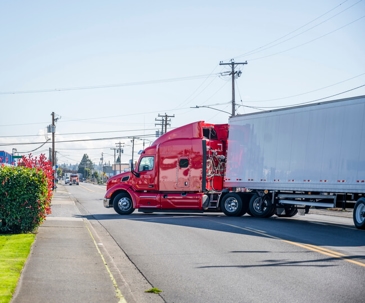
Driving near semi‑trucks can be intimidating, but understanding their limitations and following safe practices can significantly reduce your risk of a serious collision. Semi-trucks are large, heavy vehicles with long stopping distances and blind spots, and they behave differently from passenger cars in many traffic situations. This guide offers practical tips for staying safe on highways and city streets.
Maintain a Safe Following Distance
Semi-trucks can weigh up to 80,000 pounds—20 to 30 times more than a typical car. That weight means trucks need far more distance to stop. At highway speeds, a fully loaded truck may require two football fields or more to come to a complete stop.
Tailgating a truck puts you in its rear no‑zone, a blind spot extending roughly 20–30 feet behind the trailer. If the truck brakes suddenly, you may have no time to react, and the trailer blocks your view of hazards ahead.
Tip: Keep at least 4–6 seconds behind a truck under ideal conditions, and increase that distance in rain, fog, or icy roads. Use a fixed point to count seconds: when the rear of the truck passes it, start counting until your front bumper reaches the same point. If you get there too quickly, you’re too close.
Avoid Cutting Too Close in Front
One of the most dangerous mistakes around big rigs is moving into a lane too closely in front of a truck. Because trucks take much longer to stop, cutting in and braking immediately can lead to front underride collisions, where a car slides under the truck. These crashes are often catastrophic, bypassing much of your vehicle’s safety structures.
Tip: When passing a truck, wait until you can see its full front in your rearview mirror before moving back in. Then leave an extra second or two of space before slowing down. Planning lane changes early can prevent last-minute maneuvers that put you and the truck driver at risk.
Stay Out of Blind Spots
Trucks have significant no‑zones (blind spots) along both sides, in front, and behind. On the right, the blind spot can stretch across multiple lanes; on the left, it’s smaller but still large enough to hide a car. If you can’t see the driver’s face in their mirror, they likely can’t see you.
Tip: Avoid lingering beside trucks. Pass decisively, keep lateral space when possible, and minimize time spent in blind spots. On multi-lane highways or in windy conditions, extra lateral space gives both you and the truck driver more room to react.
Passing, Lane Changes, and Merges
Passing a truck safely is about planning and precision. The left side is usually safest, as the driver’s blind spot is smaller. Signal early, check your mirrors, and accelerate steadily. Avoid lingering alongside the trailer. After passing, only merge when you can see the truck’s full grille and headlights.
When merging onto highways with heavy truck traffic, use the acceleration lane to match the flow of traffic before the lane ends. Don’t squeeze between trucks or stop at the end of the ramp—this is one of the riskiest maneuvers.
Lane changes near trucks require extra foresight. Ask yourself: if I brake suddenly after moving over, will the truck behind have enough space to stop? If the answer is no, wait for a bigger gap.
Anticipate Truck Behavior in High-Risk Situations
Wide turns: Trucks swing their trailers during turns, sometimes into adjacent lanes. Never pull up beside a turning truck; stop behind it and wait until it completes the maneuver.
Hills and grades: Trucks accelerate slowly uphill and control speed downhill with engine braking or “Jake brakes.” On steep roads, give extra distance and be alert for runaway truck ramps.
Weather: High winds, rain, snow, and poor visibility amplify risks. Increase following distance, avoid driving beside trucks in strong crosswinds, and ensure your headlights and windshield are clear.
Responding to Emergencies
Truck emergencies can happen quickly—jackknifing, tire blowouts, or falling cargo.
Key strategies:
- Stay calm and scan for escape routes.
- Avoid panic braking directly behind trucks.
- Brake progressively and steer smoothly.
- Keep distance to react safely if the truck loses control.
Everyday Defensive Driving Habits
- Lane choice: Avoid being boxed in by trucks. Adjust speed to move ahead or behind clusters.
- Minimize distractions: Phones, food, and in-dash screens can delay reactions.
- Maximize visibility: Use headlights, keep mirrors and windshields clean, and ensure other drivers can see you.
- Plan ahead: Watch for exits, lane drops, and work zones. Merge early and anticipate truck behavior.
If You’re Injured in a Semi‑Truck Collision in El Paso, TX
Even the safest drivers cannot control others. If a negligent truck driver or company causes a collision, the consequences can be overwhelming—medical bills, lost income, and complex insurance issues.
Harmonson Law Firm specializes in personal injury cases involving semi-trucks, helping you:
- Investigate accidents
- Preserve evidence
- Hold responsible parties accountable
Reach out for a consultation online or by calling (915) 233-6427 to discuss your options and get guidance from experienced El Paso personal injury attorneys.